Neural Networks Explained: How AI Learns Like a Brain (Sort Of)
Understand neural networks without math or code. Learn how these AI systems process information, recognize patterns, and power everything from ChatGPT to image recognition.
Neural networks power almost every AI breakthrough you hear about. They are behind ChatGPT, image generators, voice assistants, and self-driving cars.
The name sounds intimidating. But the core idea is understandable without a technical background.
What Is a Neural Network?
A neural network is a system that learns patterns from examples by adjusting how it processes information.
Think of it as a very complex decision-making machine:
- Information goes in one end
- The network processes it through multiple stages
- A result comes out the other end
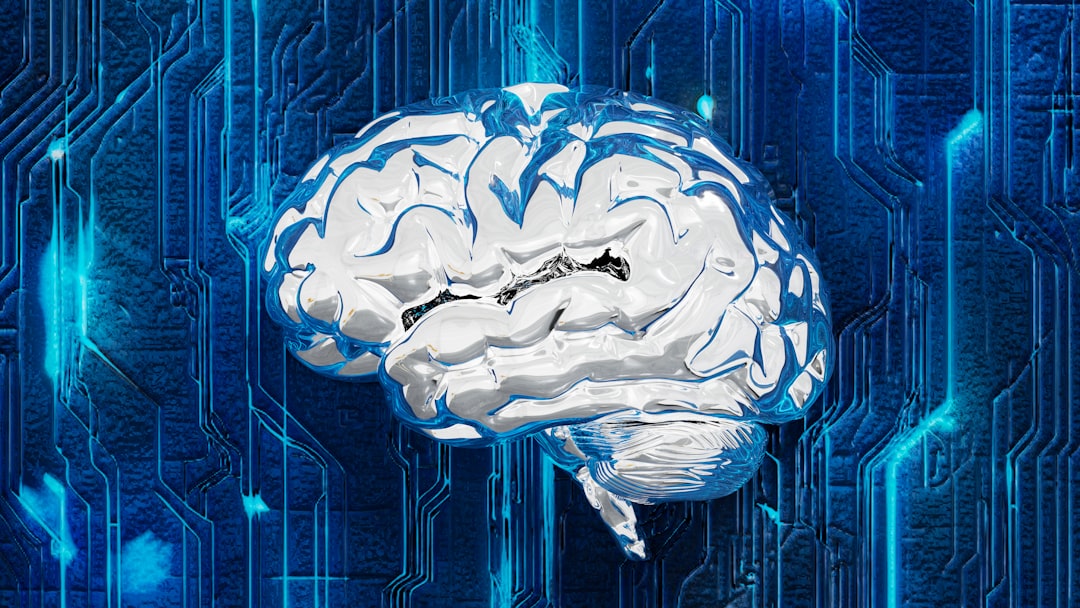
The "neural" name comes from inspiration by brain neurons. But do not take the analogy too far. These systems work quite differently from actual brains.
The Building Block: Neurons
Let us start with the smallest piece: a single artificial neuron.
What a Neuron Does
A neuron is simple:
- Receives inputs (numbers)
- Multiplies each input by a weight (importance)
- Adds them together
- Applies a function to produce output
That is it. One neuron does basic math.
A Concrete Example
Imagine a neuron deciding if you should bring an umbrella:
Inputs:
- Weather forecast (0 = sunny, 1 = rainy)
- Cloud coverage (0 to 1)
- Season (summer = 0, winter = 1)
Weights (learned importance):
- Weather forecast: 0.8 (very important)
- Cloud coverage: 0.5 (somewhat important)
- Season: 0.2 (less important)
Calculation:
- Rainy (1) × 0.8 = 0.8
- Cloudy (0.7) × 0.5 = 0.35
- Winter (1) × 0.2 = 0.2
- Total: 1.35
If total exceeds threshold (say 0.5), output "bring umbrella."
This single neuron makes a simple decision. Real power comes from combining many neurons.
Layers: Organizing Neurons
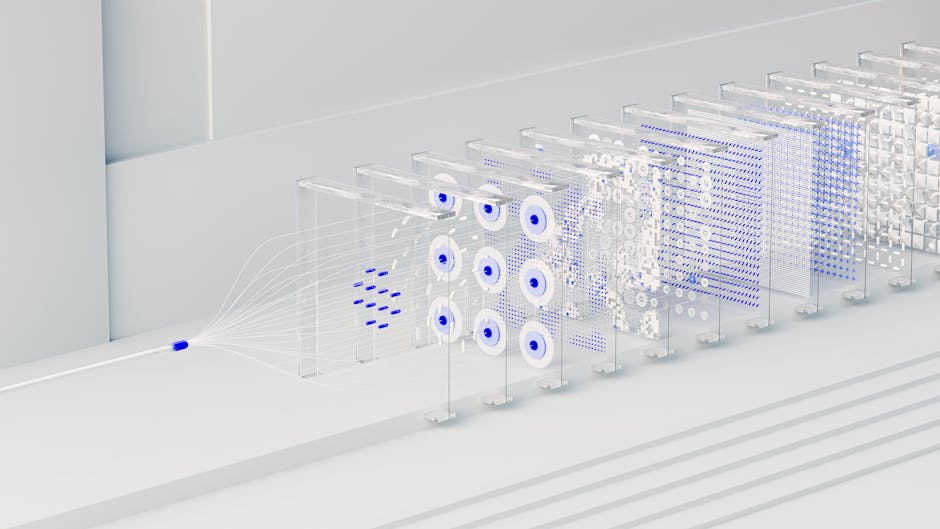
Neural networks organize neurons into layers:
Input Layer
First layer receives raw data. If you are processing a 100×100 pixel image, the input layer has 10,000 neurons (one per pixel).
Hidden Layers
Middle layers find patterns. Called "hidden" because you do not directly see their inputs or outputs.
- First hidden layer might detect edges
- Second layer might detect shapes
- Third layer might detect objects
Each layer builds on patterns found by previous layers.
Output Layer
Final layer produces the result:
- For classification: probabilities for each category
- For generation: the next word, pixel, or sound
Simple Diagram
Input Layer → Hidden Layer 1 → Hidden Layer 2 → Output Layer
   (data)      (basic patterns)  (complex patterns)  (result)
Modern AI uses many hidden layers. This is why it is called "deep learning."
For more on deep learning, see our deep learning guide.
How Neural Networks Learn
The magic is in learning. How do weights get set correctly?
Training Process
- Start random: All weights begin as random numbers. Network outputs garbage.
- Make prediction: Feed training example through network.
- Check error: Compare output to correct answer. Calculate how wrong it was.
- Adjust weights: Slightly change weights to reduce error.
- Repeat millions of times: Eventually, weights settle into patterns that work.
Backpropagation (Simplified)
The key algorithm is backpropagation:
- Error at output layer is measured
- System figures out which weights contributed most to error
- Those weights get adjusted more
- Process propagates "backward" through all layers
It is like a blame game. Weights that contributed to wrong answers get corrected.
Learning Rate
Weights change in small steps. Too big, the network oscillates and never settles. Too small, learning takes forever.
Finding the right learning rate is part of the art of training neural networks.
Types of Neural Networks
Different architectures suit different problems:
Feedforward Networks
Simplest type. Information flows one direction: input to output. Good for straightforward classification.
Convolutional Neural Networks (CNNs)
Specialized for images. Detect patterns regardless of position. A cat is still a cat whether it is in the corner or center.
Powers: Image recognition, medical imaging, self-driving car vision.
See applications in our computer vision guide.
Recurrent Neural Networks (RNNs)
Process sequences where order matters. Output depends on current input plus previous inputs.
Powers: Speech recognition, language translation, time series prediction.
Transformers
Modern breakthrough architecture. Process entire sequences at once, finding relationships between any elements.
Powers: ChatGPT, Claude, Gemini, and most modern language AI.
More on these in our what is a large language model guide.
What Makes Deep Learning "Deep"
"Deep" refers to many layers. But why do more layers help?
Abstraction Levels
Each layer learns more abstract patterns:
Image recognition example:
- Layer 1: Edges and basic shapes
- Layer 2: Textures and patterns
- Layer 3: Object parts (eyes, wheels)
- Layer 4: Complete objects (faces, cars)
- Layer 5: Scenes and contexts
Shallow networks cannot build these abstraction hierarchies.
Representational Power
More layers = ability to learn more complex patterns. A 2-layer network cannot learn what a 100-layer network can.
However, deeper networks are harder to train and need more data.
Real-World Examples
Image Recognition
You upload a photo. The network:
- Receives pixel values as input
- Early layers detect edges
- Middle layers detect shapes and textures
- Later layers recognize objects
- Output layer says "This is a dog" with 95% confidence
This happens in milliseconds.
For image AI tools, see our AI image generation guide.
Language Models (ChatGPT)
You type a question. The network:
- Converts words to numbers (embeddings)
- Transformer layers find relationships between words
- Network predicts most likely next word
- Repeats until response is complete
The network has learned language patterns from billions of examples.
Learn to use these effectively in our prompt engineering guide.
Voice Recognition
You speak to Siri. The network:
- Converts sound waves to spectrograms
- CNN layers find speech patterns
- RNN layers process sequence over time
- Output produces text of what you said
Compare assistants in our Siri vs Alexa vs Google Assistant guide.
Common Questions
How much data do neural networks need?
It depends on complexity. Simple tasks might need thousands of examples. Language models like ChatGPT trained on trillions of words.
More complex patterns require more data.
Why do neural networks make mistakes?
Several reasons:
- Training data had errors or biases
- Situation differs from training examples
- Pattern recognition is not understanding
- Random variation in training process
See our why AI fails guide.
Can neural networks explain their decisions?
Mostly no. This is the "black box" problem. We see inputs and outputs but cannot easily understand why specific decisions were made.
This is an active research area called "explainable AI."
Are bigger networks always better?
Not necessarily. Bigger networks:
- Need more training data
- Cost more to train and run
- Can overfit (memorize rather than learn)
- May not improve for simpler tasks
The right size depends on the problem.
The Limits of Neural Networks
Neural networks are powerful but limited:
No True Understanding
Networks manipulate patterns without comprehension. They do not know what words mean or what objects are.
Brittleness
Small changes in input can cause drastically different outputs. A few changed pixels can make an AI misclassify an image completely.
Data Dependency
Networks only know what was in training data. They cannot reason about new situations the way humans can.
Energy and Compute
Large networks consume enormous computing resources. Training GPT-4 scale models costs millions of dollars in compute.
For broader AI context, see our AI ethics guide.
Why This Matters for You
Understanding neural networks helps you:
Use AI tools better: Knowing these are pattern-matchers, not thinkers, helps set realistic expectations.
Evaluate AI claims: You can spot hype versus genuine capability.
Make informed decisions: Whether adopting AI for business or personal use.
Learn more effectively: This foundation enables deeper AI learning if desired.
What to Explore Next
Want to go deeper? Here is a path:
- How AI Actually Works - broader AI fundamentals
- Machine Learning Explained Simply - training and algorithms
- Deep Learning and Neural Networks - advanced architectures
- Learn AI from Scratch - practical learning guide