AI Agents Explained: The Next Big Thing After ChatGPT
An agent is a model that can act, not just answer. The capability is real and the reliability is not — and the arithmetic behind that gap explains why 2026 was not the year of agents after all.

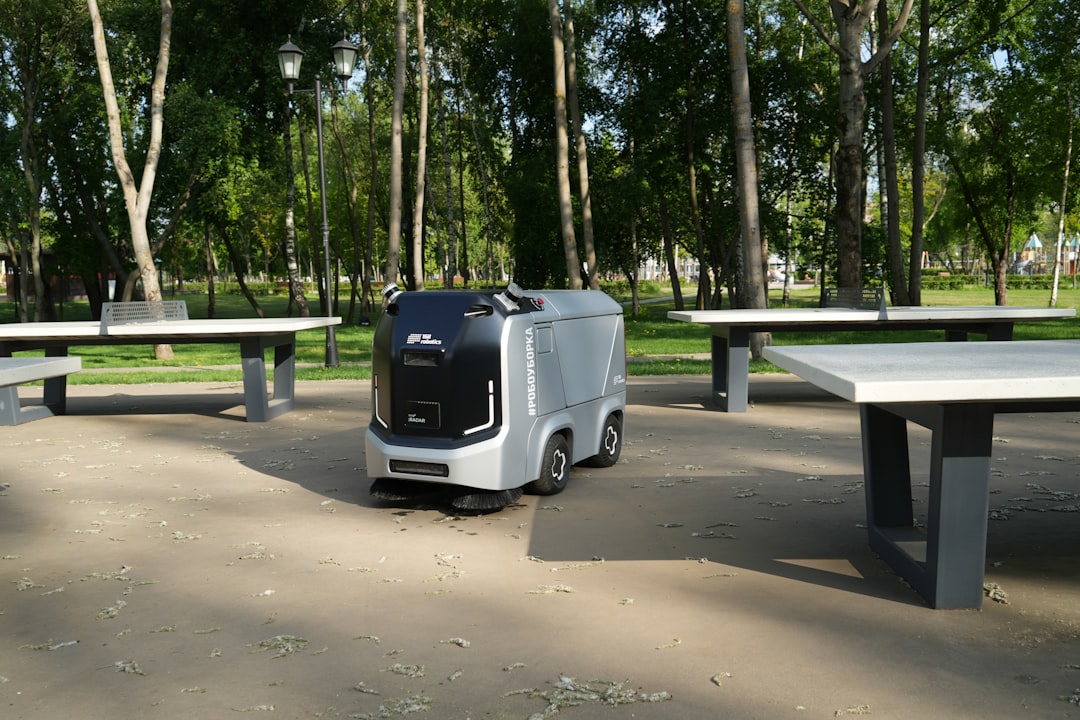
The difference between a chatbot and an agent is one word: act.
A chatbot produces text and stops. You read it, decide what to do, and do it. An agent is given an objective and then works — searching, calling tools, writing files, checking results, and deciding its own next step based on what it found.
That is a genuine change in kind, not degree. It is also why 2026 was widely predicted to be the year of agents, and why it was not.
What The Loop Looks Like
Ask a chatbot to research three suppliers and it writes what it remembers about suppliers.
An agent given the same objective searches for suppliers, reads the results, notices two are irrelevant, searches differently, opens the promising pages, extracts pricing, finds one page has no pricing, looks for it elsewhere, and assembles a comparison.
Four things make that possible. It plans — decomposing a goal into steps. It uses tools — search, code execution, file access, APIs. It observes — reading what actually came back rather than assuming. And it iterates — choosing the next step based on the last result, including recognising that a step failed.
The fourth is the one that separates an agent from a script. A script executes a fixed sequence. An agent decides the sequence as it goes, which is what makes it useful and what makes it unpredictable.
The Arithmetic That Explains Everything
Here is the number that accounts for the entire gap between agent demos and agent deployments.
Suppose each step is 95% reliable. That sounds good — better than most software integrations, better than a lot of people. Now chain it:
- 5 steps: about 77% success
- 10 steps: about 60%
- 20 steps: about 36%
Useful real-world tasks are long. Twenty steps is not an ambitious agent; it is an ordinary piece of work. And at 36% you do not have automation — you have a system a person must supervise closely, which is roughly what supervising a person would have cost.
Worse, the failures compound rather than surface. A wrong step early produces a plausible-looking result that the agent then reasons from confidently, so the error propagates through everything after it. You do not get an obvious crash. You get a confident, wrong, complete-looking output.
This is why demos are misleading in a specific way. A demo is one successful run. It tells you the task is possible, which was never in question, and nothing about how often it works.
Why This Is Hard To Fix
Improving per-step reliability from 95% to 99% is not a modest incremental gain — at twenty steps it moves success from 36% to 82%, which is the difference between a toy and a product. But that improvement is far harder than the initial capability was, and progress on it has been slower than progress on capability.
Part of the difficulty is structural. Models do not reliably know when they are wrong. A system that could accurately flag "I am uncertain about this step" could stop and ask, which would solve most of the problem. Calibrated self-assessment remains genuinely unsolved, and it is covered further in why AI fails.
What Actually Works Today
The deployments that hold up share a shape: short chains, cheap failure, obvious errors.
Research gathering works well. The chain is short, a bad result is immediately visible, and discarding it costs nothing. Coding assistance within a defined scope works, because tests and compilers provide the verification the model cannot provide for itself — an underrated point, and the reason coding agents are ahead of the rest. Routine lookup across a few systems works when the systems are stable and the query is well-defined.
What does not work: anything long, anything where a wrong action is expensive to reverse, anything requiring judgement about an unfamiliar situation, and anything running unattended overnight on something that matters.
Notice that coding agents are furthest along not because code is easier but because code is checkable. Wherever you can automatically verify a step, the reliability problem largely dissolves. That is the design lesson worth taking from this whole category.
The Safety Question, Unglamorously
Concern about agents tends toward the dramatic. The real risks are boring and much more likely.
An agent that misunderstands an instruction acts on the misunderstanding immediately, at speed, possibly many times. An agent with access to systems can send communications, modify records, or spend money before anyone reads what it decided. And it will do all of this with the same confident tone it uses when correct.
The mitigation is unexciting and effective: a person confirms anything consequential. Anything that spends, sends, deletes, or publishes gets a checkpoint. Give agents the narrowest access that lets them do the job, log what they did, and make it easy to reverse. Broad standing permissions are how the mundane failures become expensive ones.
What Is Actually New Here
It is worth separating the genuine shift from the marketing, since "agent" is now attached to a great deal of software that is a chatbot with a plugin.
Genuinely new: models can decide their own sequence of actions rather than following a fixed path, and can recover from a failed step by trying something else. That is real and it is not what previous automation did.
Not new: automation itself. Scripts have called APIs for decades, more reliably than any agent, and for well-defined repetitive tasks a script remains the correct tool. The case for an agent is specifically when the sequence cannot be known in advance.
If a vendor describes their agent doing something with a fixed known sequence, they have built a workflow and called it an agent.
Where To Start
Do not start by building one. Start by using the supervised ones that exist — coding assistants with tool access, research tools that browse and synthesise — and pay attention to where they go wrong. That calibration is more valuable than any framework tutorial.
If you are building, pick a task with a short chain, an obvious failure signal, and a cheap failure cost. Instrument every step so you can see what it decided and why. Add a human checkpoint before anything irreversible. Then measure how often it actually completes, over many runs — not whether it worked the once.
The grounding is worth having: how AI actually works explains why the confidence-without-accuracy problem exists at all, and what a large language model is covers the architecture underneath. For where this sits against the year's other developments, AI trends 2026 scores the agent prediction against what actually shipped. If your interest is practical automation rather than autonomy, business automation covers the tools that work today, and custom GPTs covers the much simpler thing most people actually need.
Agents will matter. The reliability problem is a real engineering obstacle rather than a marketing one, and it has held longer than nearly everyone predicted.
Frequently Asked Questions
- What is an AI agent?
- A language model given the ability to take actions rather than only produce text — searching, calling tools, writing files, making requests — and to decide its own sequence of steps toward a goal. The distinction from a chatbot is that it does things, and decides what to do next based on what happened.
- How is an AI agent different from ChatGPT?
- ChatGPT answers and stops. An agent is given an objective and keeps going — planning a step, executing it, reading the result, and choosing the next one — until it finishes or fails. The loop is the difference, and it is also where the reliability problems come from.
- Why are AI agents not widely used yet?
- Per-step reliability compounds badly. A system that is 95% reliable on each step succeeds on a twenty-step task only about a third of the time, and useful tasks are long. Until per-step accuracy improves substantially, anything unsupervised stays fragile.
- Are AI agents safe to let run on their own?
- Not for anything consequential, and the risk is not dramatic — it is mundane. An agent that misreads a situation and confidently takes a wrong action does so quickly and repeatedly. Keep a person confirming anything that spends money, sends communications, or changes data.
- What are AI agents actually good for today?
- Narrow, bounded, supervised tasks with cheap failure — research gathering, drafting from multiple sources, routine data lookup across a few systems, coding assistance within a defined scope. The pattern is short chains where a wrong result is obvious and easily discarded.