AI in Healthcare: Transforming Medicine with Artificial Intelligence
Diagnostic AI gets the headlines while paperwork gets the actual deployments. Where AI is genuinely in clinical use, why adoption is slower than the demos suggest, and what the accuracy numbers leave out.

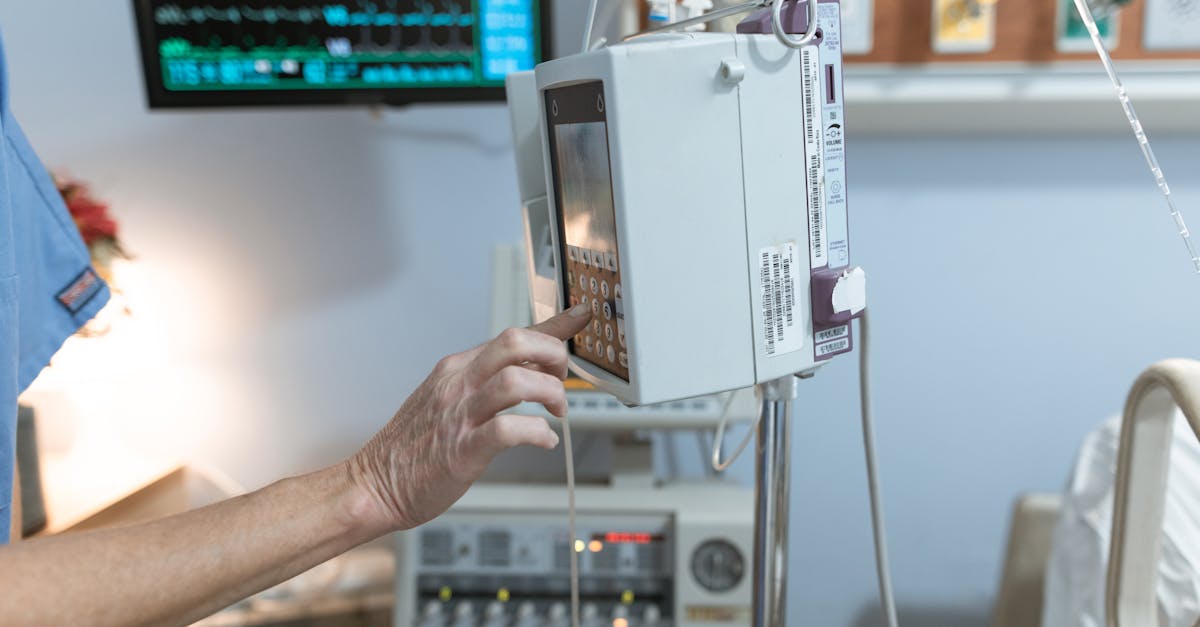
The coverage and the deployments point in opposite directions.
What gets written about is diagnostic AI — a model spotting a tumour a radiologist missed, a system predicting deterioration hours early. Genuinely impressive research, and mostly still research.
What is actually running in hospitals today is paperwork. Ambient documentation that drafts a clinical note from the consultation. Coding and billing automation. Scheduling optimisation. Triage of imaging queues so the urgent scan gets read first.
That gap is the most useful thing to understand about this subject, and the reason for it is not technical.
Why The Boring Applications Won
Four constraints govern medical deployment, and none of them are about model accuracy.
Liability. When a diagnosis is wrong, someone is accountable. That structure has no obvious place for a model, and until it does, systems that inform a clinician who remains responsible are dramatically easier to deploy than systems that decide.
Regulation. Medical devices require approval, and software that influences clinical decisions is a medical device. That process is slow by design. Software that drafts a note and changes no clinical decision sits outside it entirely — which is precisely why documentation tools deployed first.
Integration. Health record systems are old, fragmented, and were not built for this. A great many pilots die here rather than on performance, and this is the single most underestimated obstacle.
Validation. A model trained at three academic hospitals may perform differently at a rural clinic with older scanners and a different patient population. Establishing that it generalises is expensive and unglamorous and absolutely necessary.
Notice that all four are institutional. Capability is not the bottleneck and has not been for a while.
Imaging: The Real Success, Described Accurately
Diagnostic imaging is where clinical AI is most genuinely established, and the framing in most coverage is wrong in a specific way.
These systems do not diagnose. They flag — highlighting a region, ranking a queue, marking a study as likely urgent. A radiologist reviews and decides. The value is not replacing that judgement; it is directing attention, catching the subtle finding at the end of a long shift, and getting the critical scan read sooner.
That is a real and meaningful improvement, and it is a different claim from the one the headlines make.
The accuracy caveat is worth stating plainly. A reported figure describes performance on a particular test set, usually from the institutions that produced the training data. Performance on different equipment, different protocols, or a different patient population is an open question until measured — and the failure mode is the general one for computer vision: models degrade when conditions differ from training in ways nobody thought to vary.
Documentation: The Deployment Nobody Writes About
Clinicians spend an enormous share of their time on notes. It is consistently cited as a leading contributor to burnout, and it is work that requires no clinical judgement to transcribe — only to verify.
Ambient documentation tools listen to a consultation and produce a draft note the clinician reviews and signs. This is the most widely deployed clinical AI in existence, and it is barely discussed because a better note is not a story.
It is also close to an ideal application: the failure mode is a clumsy draft rather than a harmed patient, verification is fast, a qualified person signs off, and the value is immediate and measurable in hours returned.
If you want to understand where medical AI actually is, this is a better example than any diagnostic result.
Drug Discovery, With Appropriate Caution
AI has genuinely changed parts of the discovery pipeline — predicting protein structure, screening candidate compounds computationally rather than physically, identifying existing drugs that might work elsewhere.
The caution: discovery is the fast part of a very long process. A promising candidate still faces years of trials, and most fail there for reasons no model predicted. Compressing the earliest stage is worth having and does not compress the timeline as much as coverage implies.
The Problems That Deserve More Attention
Training data is not representative. Medical datasets skew toward the populations of the institutions that generated them. A model validated on one demographic can perform worse on another, and in medicine that is not a statistical curiosity — it is a safety issue with a direct path to harm. The general problem is covered in responsible AI.
Explanation is often required. "The model indicated it" is not an adequate clinical justification. Deep networks cannot do much better than that, which limits where they can responsibly sit — a constraint that follows from how these systems are built.
Automation bias is real. When a system is usually right, people stop checking carefully. That is a predictable human response and it erodes exactly the oversight the deployment model depends on.
Confident errors look like confident correct answers. The single most important property to understand about these systems, covered in why AI fails, and it carries more weight here than in any other domain.
What This Means Practically
If you work in healthcare: the near-term wins are administrative. Documentation, coding, scheduling, queue triage. They are approvable, integrable, and the failure modes are recoverable. Clinical decision support is coming and moves at the speed of validation and regulation, not research.
If you are a patient: AI is probably already involved in your care, in scheduling and documentation and possibly in how quickly your scan was read. It is very unlikely to be diagnosing you, and a clinician remains accountable for every decision.
If you are evaluating a vendor: ask what populations the model was validated on and how they compare to yours. Ask what happens when it is uncertain. Ask what integration actually requires. Those three questions predict deployment success better than any accuracy figure.
The realistic picture is a technology genuinely improving healthcare, largely through unglamorous work, on a timeline set by institutions rather than by research. The wider pattern — capability arriving years before deployment — is covered in AI trends 2026, and healthcare is the clearest case of it anywhere.
Frequently Asked Questions
- Is AI actually used in hospitals today?
- Yes, though mostly in places patients never see. Documentation, scheduling, coding and billing, and imaging triage are where real deployments sit. Systems that make clinical decisions independently are rare, because liability and regulation make that a very different proposition.
- Can AI diagnose disease?
- It can flag findings for a clinician to review, which is not the same thing. Regulatory approval, professional accountability, and the need for physical examination and patient history all mean these tools support a diagnosis rather than make one. Coverage that says otherwise is usually describing a research result.
- How accurate is medical AI?
- Reported accuracy is often excellent and describes performance on a specific test set from specific institutions. It frequently drops when the same model meets different scanners, different populations, or different imaging protocols — which is exactly what deployment involves.
- Will AI replace doctors?
- No, and the constraint is not capability. Medicine involves physical examination, accountability for decisions, and communicating with frightened people, none of which a model does. What is genuinely changing is the documentation burden, which is the part clinicians most want back.
- What is the biggest obstacle to AI in healthcare?
- Not the technology. It is validation across diverse populations, integration with health record systems that were never designed for it, unresolved liability when a model is wrong, and regulatory approval that is deliberately slow. Those are institutional problems and they move at institutional speed.